You walk across the living room and feel one floorboard give slightly under your foot. Yesterday, you didn’t notice it. Now you can’t stop checking it.
That’s the frustrating thing about the first signs of water damage. It may not be as obvious as a flooded room or water pouring through the ceiling. Sometimes it’s a patch of paint that looks different, a smell you can’t place, or a ceiling line you’re pretty sure wasn’t there before.
At Property Medics, we respond to water damage across Metro Atlanta. In this guide, we break down the signs of water damage in your home, from basement to ceiling, explain what they mean, and what to do about them.
What Water Damage Actually Looks Like (and Why It’s Easy to Miss)
Finding the source of water damage takes a little detective work. Start with what has changed, then follow the clues.
The Difference Between Old and New Water Damage
Fresh damage may still feel damp or soft, while older damage leaves dried brown stains, warped material, or paint that bubbled and hardened again. Rings within a stain can point to repeated wetting and drying.
Dry doesn’t mean your problem is gone. The visible spot can dry even while the source is still leaking somewhere out of sight.
Categories of Water Damage (Clean, Gray, and Black Water)
The IICRC classifies water damage into 3 categories depending on the source and what the water encounters as it moves through a property. Category 3, or black water, refers to grossly contaminated water, including sewage and certain contaminated floodwater. When sewage is involved, leave cleanup to professionals equipped to handle it safely.
Signs of Water Damage in Your Home, Room by Room
Water leaves different clues depending on where it ends up. As you check for signs of water damage in your home, here’s what should catch your attention from room to room.
Signs of Water Damage on Your Ceiling
Yellow or brown rings are the classic giveaway, especially when rings within the stain suggest repeated leaks. Bubbling or peeling paint can also signal moisture, while sagging drywall has absorbed enough water to weaken and shouldn’t be pressed or stood beneath. Just don’t expect the stain to identify the source. A bathroom overflow and an active roof leak can leave surprisingly similar marks.
Signs of Water Damage in Your Basement
You don’t need a puddle to know your basement has been getting wet. White, chalky efflorescence shows that moisture has moved through the masonry, while rust around drains or metal posts can reveal repeated dampness.
Also watch for buckled flooring or foundation cracks that seep after rain, especially in Atlanta’s clay-heavy soil, which holds moisture around the foundation.
Signs of Water Damage on Walls and Floors
Watch for changes in the materials themselves. Drywall can turn soft or spongy, paint may bubble or peel, and baseboards can discolor as moisture reaches them. Wood flooring may cup or crown when wet, then develop gaps as it dries, so investigate any section that suddenly feels softer, sits higher, or stops lining up with the surrounding floor.
Signs of Water Damage in an Attic or Crawlspace
In the attic, look for dark streaks across roof decking or rafters and insulation that appears compressed, discolored, or damp. Condensation or dripping from condensate lines around your HVAC equipment can also cause trouble during Georgia’s long cooling season.
Down in the crawlspace, standing water or persistently damp soil can point to drainage problems around your home’s foundation.
Hidden Signs of Water Damage You Can’t See Without Looking Closely
No stain? No puddle? Your house may still be dropping water damage hints. Watch for these less obvious changes:
- A Musty Smell You Can’t Track Down: A musty odor that keeps returning to the same area can point to moisture or microbial growth hiding out of sight.
- A Water Bill That Suddenly Jumps: An unexplained increase can be your first clue that water is escaping somewhere. The EPA recommends you fix a leak by checking your water meter: record the reading, use no water for two hours, then check for movement.
- Doors, Windows, or Floors Acting Differently: A door that suddenly sticks, a window that stops latching, or a floor that develops a new dip can hint that moisture is affecting the surrounding structure. The key word there is suddenly, especially when another water-damage clue has appeared nearby.
- Carpet or Flooring That Feels Off: A patch of carpet that feels damp, unusually cool, or heavier underfoot can signal moisture in the padding below. Rippling or discoloration can also signal it’s time to check underneath.
How to Prevent Future Water Damage
You can’t prevent every leak, but you can make it harder for water to catch you off guard. A few good habits go a long way:
- Clean gutters and downspouts twice a year, and make sure water drains away from the foundation.
- Have HVAC condensate lines checked annually, especially before Georgia’s cooling season gets into full swing.
- Keep the soil around your home graded away from the foundation so rainwater doesn’t collect against it.
- Test your sump pump before summer storms arrive rather than finding out it has a problem during the next downpour.
- Know where your main water shutoff is and how to use it so you can act quickly if a pipe bursts.
What to Do When You Find Signs of Water Damage
Step 1 — Stop the Source If You Safely Can
If you can safely reach the source, shut off the water or stop the overflowing appliance. If a pipe has burst, shut off the main water supply if you can reach it safely. From there, schedule professional burst pipe cleanup to handle the water that’s already made its way into flooring, drywall, or other materials.
If water has reached outlets, wiring, or an electrical panel, stay out of the affected area. Don’t open walls, pull down wet materials, or enter an area where electrical or structural safety is uncertain.
Step 2 — Document Everything Before Touching It
Before cleanup begins, take photos and video of what you found, including damaged materials and belongings. Note when you discovered the problem, and keep relevant receipts or records if an insurance claim may be involved.
Step 3 — Call a Water Damage Restoration Professional Promptly
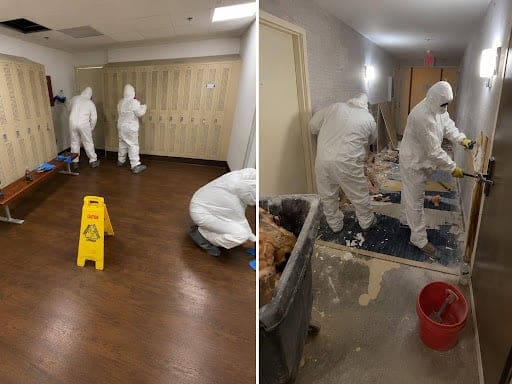
Once water has soaked into drywall, flooring, insulation, or other porous materials, what you can see only goes so far. The EPA recommends drying wet materials within 24 to 48 hours to help prevent mold growth. For an example of how professional restoration can address extensive water damage, see our commercial water damage restoration case study
If you’ve found signs of water damage in your Atlanta home, Property Medics of Georgia can help you find out how far the problem goes. Our water damage restoration services track down hidden moisture and start the drying process, while mold remediation is available when water has already left another problem behind.
Call Property Medics or schedule your free assessment online to get started.
FAQ — Signs of Water Damage
How can I tell if water damage is old or new?
Fresh damage is more likely to feel damp or soft. Older damage tends to leave dried brown rings, warped materials, or paint that has bubbled and dried again. Rings within rings can suggest repeat leaks.
Can water damage be hidden inside walls?
Absolutely. Water can follow pipes, framing, and insulation without immediately staining the wall, so surface appearance alone can’t rule out hidden moisture.
How quickly does water damage lead to mold?
The EPA recommends drying wet materials within 24 to 48 hours to help prevent mold growth. Georgia’s warm, humid conditions make quick drying especially important once porous materials get soaked.
What are the first signs of water damage after a roof leak?
Ceiling discoloration, bubbling paint, or sagging drywall are common clues. Keep in mind that the stain may appear away from the roof opening because water can travel along building materials before showing up below.
Does Homeowners Insurance Cover Water Damage?
It depends on your policy and what caused the damage. Sudden events such as a burst pipe may be treated differently from gradual leaks, maintenance problems, or outside flooding, so check your policy or speak with your insurer about your specific situation.
Can I Fix Water Damage Myself, or Do I Need a Professional?
A small spill that stays on the surface is usually something you can dry yourself. Once water has soaked into drywall, insulation, subflooring, or other building materials, professional inspection can help determine where moisture remains.
Does Renters Insurance Cover Water Damage?
Renters insurance may cover belongings damaged by certain sudden water events, while the property owner’s coverage generally covers damage to the building itself. If you spot water damage in a rental, document it and notify your landlord promptly.