Finding mold usually raises questions pretty quickly. How far has it spread? Where did the moisture come from? And what is mold remediation actually going to involve if wiping down the visible spot isn’t enough?
Especially in Georgia’s humidity, where a roof leak, summer storm, or damp crawl space can leave moisture where you don’t immediately see it, it’s important to dry wet materials within 24 to 48 hours to help prevent mold growth.
After helping hundreds of Metro Atlanta property owners with mold problems, Property Medics knows that what you see at first doesn’t always tell the whole story. In this guide, we explain what mold remediation is, outline the process, and share tips to help prevent mold from coming back.
Why Mold Is a Year-Round Risk in Georgia Homes
Mold doesn’t need a particular season to become a problem in Georgia. If moisture lingers, it can grow.
Why Mold Grows in Atlanta Homes
Sometimes the source is obvious, like a burst pipe or water that came in during a storm. Other times, mold shows up because an HVAC system has been creating condensation or a crawl space has stayed damp longer than anyone realized. When a leak or flood is behind the problem, water damage restoration can help control wet materials and lingering moisture.
Is Mold Always Dangerous?
Because reactions can vary from person to person, the warning signs of mold toxicity may look different depending on who’s being exposed.
CDC guidance on mold and health notes that mold can cause irritation or allergic reactions, and some people are more sensitive to it than others. Even the mold commonly called “black mold” shouldn’t be judged by color alone.
Mold Removal vs. Mold Remediation: What’s the Difference?
If you wipe mold off a shower tile, you’ve removed the growth you can see. When mold has worked its way into drywall after a leak, remediation goes further by addressing the affected materials and the moisture behind the problem while keeping mold from spreading during cleanup.
Since mold spores naturally exist indoors and outdoors, the goal isn’t to eliminate every spore. It’s to remove unwanted growth and correct the conditions that allowed it to develop.
| Mold Removal | Mold Remediation | |
| Scope | Visible mold cleanup | Mold growth and affected materials |
| Typical Tools | Basic cleaning supplies | Containment and professional equipment |
| Addresses Moisture Source | Not necessarily | Yes |
| May Include Testing | Usually no | When appropriate |
| Best Fit | Small, manageable areas | Larger or more complex problems |
When “Mold Removal” Alone Is Enough
A small mold patch doesn’t automatically mean you need to call in a professional. The EPA guidelines on mold remediation say homeowners can generally handle areas smaller than about 10 square feet themselves when there aren’t complications such as extensive water damage.
On a hard surface, detergent and water may do the job. Just make sure the area dries completely and address whatever caused it to get wet, or that little patch may be back before long.
When Professional Mold Remediation Is Required
The situation changes when you’re looking at a large area of mold, affected drywall or insulation, or growth that may have reached the HVAC system. Significant water damage can complicate cleanup too, especially when contaminated water is involved. If mold showed up after a sewer backup, schedule professional sewage cleanup right away.
What Does the Mold Remediation Process Involve?
So, what is the mold remediation process once you’ve determined you need professional help? Every home is a little different, but here’s what you can generally expect once our team gets to work.
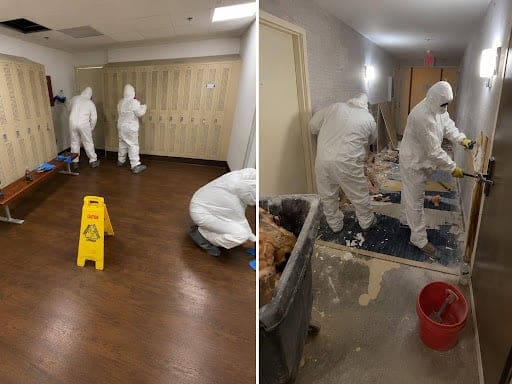
- Mold Inspection and Assessment: We start by figuring out where the mold is and where the moisture is coming from. Moisture meters and thermal imaging help us spot issues that aren’t obvious on the surface, and we use air or surface sampling when needed. Our process follows the IICRC S520 Standard for mold remediation.
- Containment and Air Filtration Setup: Before the messier work starts, we separate the affected area from the rest of your home with plastic barriers. Negative air pressure and HEPA-filtered air scrubbers then help keep what we’re disturbing inside that controlled work area.
- Mold Removal and Treatment: Some materials can be cleaned, while moldy drywall or insulation may be too far gone to save. We’ll determine what can stay and what needs to come out. Our mold remediation services also include rebuilding the affected area, so you aren’t left with a clean room that’s still missing part of a wall.
- Drying, Repairs, and Post-Remediation Verification: We use dehumidifiers and air movers to get the area dry before repairs are finished. From there, we can replace drywall, paint, and handle the restoration work needed to put the space back together. Post-remediation testing is part of our process, and you can also ask about independent verification for larger projects.
How Much Does Mold Remediation Cost?
Once you know what the work involves, the next question is usually pretty predictable: what is mold remediation going to cost me? A small bathroom problem and mold spread throughout a crawl space aren’t the same job, so one catch-all price wouldn’t tell you much.
Here’s what you need to know:
Factors That Affect the Cost
- Affected Square Footage: A small patch in one room is a very different job from mold spread across hundreds of square feet. The larger the affected area, the more labor and equipment the project can require.
- Location in the Home: Mold isn’t always considerate enough to grow somewhere easy to reach. Crawl spaces and attics can make access harder, while HVAC involvement can require a different approach.
- Extent of Material Damage: Mold that has penetrated drywall, insulation, or other porous materials may require removal and replacement rather than surface cleaning.
- Post-Remediation Testing: If independent verification is included, ask whether that service is part of the estimate or a separate cost.
- Reconstruction: Pay attention to where the estimate ends. We can rebuild affected areas after remediation, so you may not need to bring in another contractor to finish the room.
Does Homeowners Insurance Cover Mold Remediation?
Coverage usually depends on why the mold developed and what your policy covers. Mold connected to a sudden covered water loss, such as certain plumbing or storm-related damage, may be treated differently from growth caused by a long-term leak or maintenance problem.
If you think insurance may be involved, take photos before cleanup starts and call your carrier. Ask what documentation they want and whether your policy has mold-specific limits or exclusions. It’s much easier to sort that out early than to discover afterward that the adjuster needed something you no longer have.
Preventing Mold From Coming Back
Watch for plumbing leaks and HVAC condensation, keep indoor humidity under control, and make sure gutters and grading move water away from your home. Damp crawl spaces deserve attention too, since moisture can linger without being obvious upstairs.
If you’ve been trying to figure out what mold remediation is because you’ve found mold in your home, you don’t have to figure out the next steps on your own. Property Medics’ IICRC-certified team helps property owners across Metro Atlanta tackle mold problems at the source.
FAQ — Mold Remediation Questions Atlanta Homeowners Ask
How Long Does Mold Remediation Take?
A smaller, contained project may only take a day or two, while widespread mold or repairs can extend the timeline. We’ll have a much better idea once we understand the extent of the problem.
Can I Stay in My Home During Mold Remediation?
Often, yes, if the work can be safely contained away from the areas you’re using. Larger projects or mold involving the HVAC system may make temporary stays elsewhere the more practical option.
What Is the Difference Between Mold Remediation and Mold Removal?
Mold removal usually refers to cleaning away visible growth. Remediation addresses a larger mold problem, including affected materials, containment during cleanup, and the moisture conditions that allowed the mold to grow.
Does Mold Come Back After Remediation?
It can if moisture gets back in. That’s why keeping the area dry after remediation matters as much as removing the mold in the first place.
How Do I Know If I Need Professional Mold Remediation?
If the mold is widespread, hidden inside building materials, or tied to major water damage, it’s time to bring in a professional. When you’re unsure, an assessment can tell you what you’re actually dealing with.