Understanding the difference between fire vs smoke damage affects everything from cleanup to evaluating insurance claims.
Property Medics has worked on more than 250 fire-related restoration projects across metro Atlanta. Our IICRC-certified team has seen firsthand how often smoke damage gets overlooked in the early stages and how it impacts your safety and restoration costs. In this guide, we provide a comprehensive comparison of smoke and fire damage restoration in Atlanta, how their approaches differ, and when it’s time to call a professional for help.
Understanding the Core Differences Between Fire and Smoke Damage
Fire and smoke damage often happen together, but they do not behave the same way once the fire is out. One leaves behind direct destruction in specific areas, while the other quietly spreads through the property.
Before breaking down fire vs smoke damage, let’s review how each type forms and what it typically affects.
What is Fire Damage?
Fire damage is the direct result of flames and heat coming into contact with materials inside your home or building. It typically remains concentrated in the areas where the flames were most active, and includes:
- Burned or charred surfaces
- Melted fixtures and warped materials
- Structural damage to framing, drywall, and flooring
Heat can also cause damage that is not immediately obvious. Materials may look intact but have been weakened enough to require removal.
What is Smoke Damage?
Smoke damage is less contained. As materials burn, they release particles and gases that move through the air and settle throughout the property, often reaching rooms the fire never touched.
These particles can travel through HVAC systems, walls, ceilings, and porous materials like insulation. Once they settle, they leave behind residue that can stain surfaces, create lingering odors, and introduce chemical contamination.
The type of smoke affects how that residue behaves:
- Dry Smoke: Fine particles from fast-burning fires that spread easily and settle deep into surfaces
- Wet Smoke: Thicker, sticky residue from slower fires that clings to materials and is harder to clean
- Protein Smoke: Residue that is harder to see but can discolor surfaces and leave lingering odors
When smoke particles absorb moisture from Atlanta’s humid air, they sink deeper into materials, making odors harder to remove and smoke damage repair more complex.
Comparing Fire vs Smoke Damage
Fire damage is usually concentrated and easier to spot, while smoke damage spreads further and often reaches areas that appear untouched. In many Atlanta homes, especially when the HVAC system is running, smoke can circulate throughout the property and settle into hard-to-reach spaces.
Health and Safety Implications You Need to Know
Even after the fire is out, there are health and safety risks to be aware of.
Immediate Health Hazards from Fire Damage
- Structural Instability
Heat can weaken framing and support systems, which increases the risk of collapse in damaged areas. - Electrical Hazards
Damaged wiring and exposed systems can create a serious safety risk if power is restored too soon. - Contaminated Water
Water used during firefighting efforts often carries debris and chemicals. When it soaks into flooring and walls, it can create moisture problems that need to be addressed quickly. - Air Quality Concerns
Burned materials release gases that can make the air unsafe to breathe, especially in enclosed spaces.
Long-Term Health Effects of Smoke Exposure
- Respiratory Issues
Fine particles can linger in the air and settle on surfaces, leading to coughing and throat irritation. - Skin And Eye Irritation
Residue left behind may contain acidic compounds that can irritate the skin and eyes upon contact. - Lingering Chemical Exposure
Smoke releases a mix of chemicals that can continue to off-gas, especially if they remain trapped in materials. - Moisture-Related Complications
In Atlanta’s humid climate, smoke-damaged materials can retain moisture, increasing the risk of mold growth.
Children, older adults, and anyone with respiratory conditions tend to feel these effects more quickly, making it vital to know what you are dealing with.
Immediate Response Steps: What to Do First
What you do in the first few hours after a fire can have a significant impact on your health and safety and on how far the damage spreads.
Fire Damage Emergency Protocol
- Establish A Safe Perimeter
Stay away from damaged areas until they have been properly assessed. Heat can weaken structural components, even when they look intact at first. - Shut Off Utilities If Needed
Utilities such as electrical systems and gas lines can pose risks after a fire. Carefully shut them off, with professional assistance if needed. - Prevent Further Exposure
Open sections of the property can allow weather and debris in. Temporary board-up or tarping helps protect the space while you figure out the next steps. - Document Visible Damage
Take photos and videos before anything is moved around. Visual records can make a difference when your insurance claim is reviewed.
Smoke Damage Containment Steps
- Shut Down The HVAC System
Running your heating or cooling system can circulate smoke particles through the entire property. Shut them off to avoid further contamination. - Be Strategic With Ventilation
Opening windows can help in some cases, but it can also pull particles deeper into certain areas depending on airflow. - Avoid Aggressive Cleaning Early On
Using the wrong cleaners or scrubbing too soon can push residue deeper into surfaces and set stains permanently. - Isolate Affected Areas When Possible
Closing off rooms can limit the spread of smoke while you figure out the next steps.
Professional Assessment and Restoration Approaches
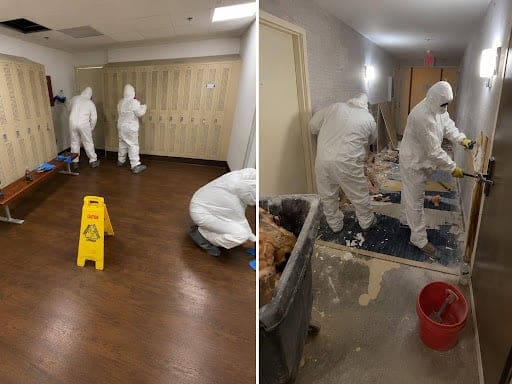
At Property Medics of Georgia, we follow IICRC standards to assess what can be restored and what needs to be replaced. Our storm damage restoration experience informs a broader approach to fire and smoke damage cleanup, especially when the two overlap.
Fire damage restoration in Atlanta often ranges from $15,000 to $50,000, depending on the severity, while smoke cleanup typically ranges from $8,000 to $25,000. Timelines vary based on the extent of the damage.
Fire Damage Assessment and Restoration
- Structural Evaluation
In more severe cases, this may involve engineers or local permitting requirements to confirm that the building can be safely repaired - Demolition And Debris Removal
Materials that are burned or structurally compromised are removed to prepare for rebuilding. - Reconstruction Planning
Repairs are completed in phases and follow local building codes and inspection requirements across Georgia.
Working with a team that regularly handles fire damage restoration can help keep the process organized and properly documented from the start.
Smoke Damage Assessment and Remediation
- Air Quality Testing
This helps determine how far particles have spread and whether the air is safe to breathe. - Surface And Content Evaluation
Items are thoroughly checked to decide whether they can be cleaned or need to be replaced. - Odor Removal And Deep Cleaning
Specialized equipment is used to break down and remove smoke particles from surfaces and the air.
One of the biggest challenges with smoke damage is how far it can travel before it is detected. In many cases, it reaches areas such as insulation and ductwork, which require specialized cleaning.
Common Mistakes That Cost Atlanta Property Owners
Below are some common fire and smoke damage restoration mistakes that can create bigger problems down the line.
Insurance Claim Pitfalls
Insurance claims run into trouble when the full scope of damage is not documented early on. Smoke can spread into areas that are not immediately obvious, and if it is not included in your records, it may not be covered later. Waiting too long to document or submit details can also slow the process.
Be cautious of early settlement offers. While they may seem appealing, they do not always account for hidden damage that pops up after a more thorough inspection.
Restoration Timeline Mistakes
Moving back in too soon can expose you to particles that are still in the air or settled on surfaces, even if everything looks clean. Waiting too long to have it assessed can also make things harder to fix, since residue continues to settle deeper into materials over time.
And while it is tempting to go with the lowest quote, cheaper options do not always cover the full scope of cleanup.
Fire vs Smoke Damage FAQs
Can I clean smoke damage myself, or do I need professional restoration?
Small surface spots can sometimes be handled alone. But once smoke gets into ducts, insulation, or fabrics, it is much harder to fully remove without professional equipment.
How long does smoke damage continue affecting my property after a fire?
It does not stop when the fire is out. Smoke can continue to settle into materials for a day or two, and in humid conditions, odors and residue can linger even longer if nothing is done.
Does homeowners’ insurance cover smoke damage differently from fire damage?
Most policies in Georgia cover both under the same fire-related claim. Smoke damage often requires more detailed documentation since it is not always visible during an initial inspection.
What is the difference between wet smoke and dry smoke damage?
Wet smoke is thicker and sticks to surfaces, making it tougher to clean. Dry smoke is lighter and spreads further, but it is usually easier to remove with the right approach.
How do I know if smoke damage has affected my HVAC system?
If you notice odors when the system runs or residue around the vents, it may indicate that smoke has circulated through the system. If that’s the case, schedule a professional inspection right away.